Python Course for Class 8 Students
A project-based 36-week, 72-session Python programming curriculum for Class 8 students, progressing from clear coding foundations to a working year-end application.
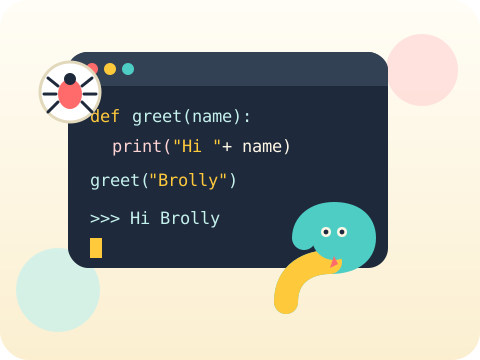
Quick answer
The Class 8 Python program provides two one-hour coding sessions per week for 36 instructional weeks. Every module combines concepts, guided practice, debugging and a project, so learners develop working Python skills rather than merely replicating code.
9 modules × 8 sessions = 72 guided sessions
Select any module to read the full explanation—the big idea, the concepts unpacked, the session-by-session plan and the project students build.
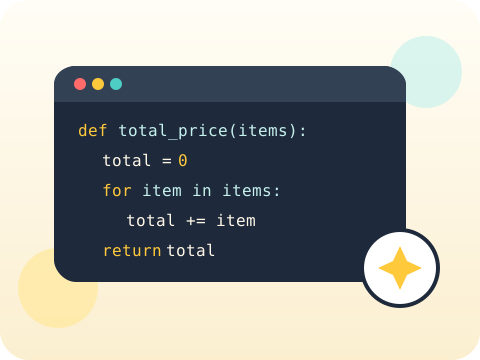
Confident Python
The same program can be written twice: once so it runs, once so it lasts.
- Style and naming
- Types and operators
- Debugging workflow
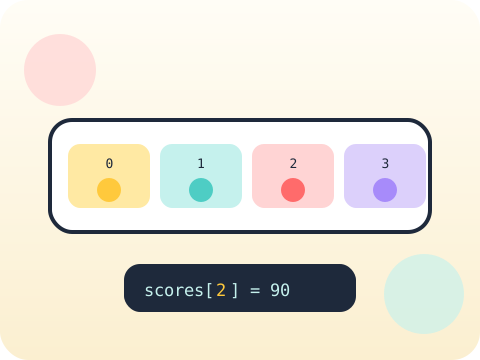
Data Structures
Data has a shape. Match the shape and the code almost writes itself.
- Lists and dictionaries
- Sets
- Nested structures
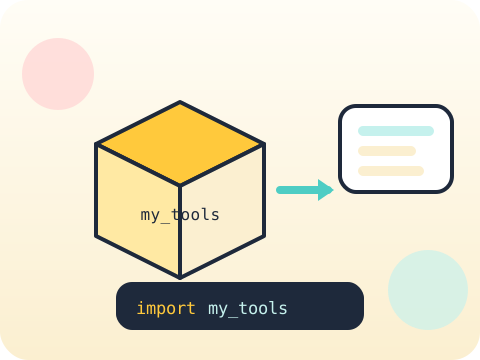
Functions and Modules
Stop rewriting your best code. Package it and import it instead.
- Function design
- Imports
- Build a module
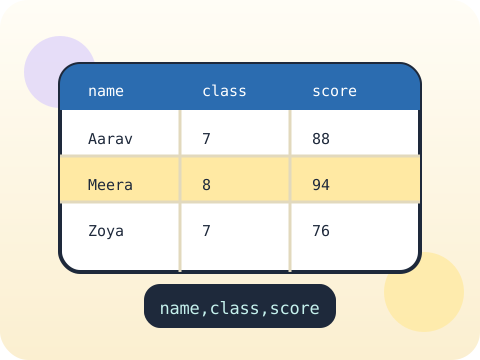
Files and Structured Data
A spreadsheet is just text with commas in useful places.
- Text and CSV
- Parse records
- Save results
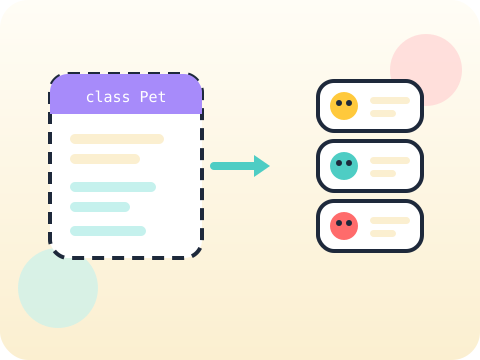
Object-Oriented Thinking
Until now you used things Python provided. Now you invent your own.
- Classes and objects
- Attributes
- Methods
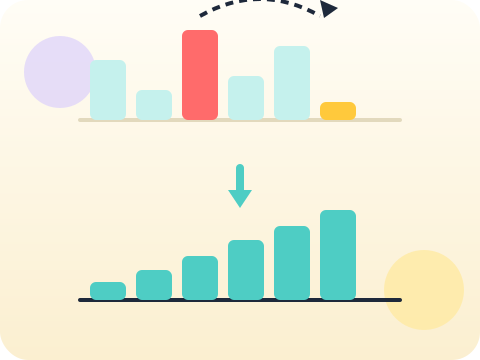
Algorithms
Two programs give the same answer. One takes a second, the other takes an hour. Why?
- Search
- Sort intuition
- Efficiency basics

Data Visualisation
A number on its own is a fact. A chart is an argument.
- Clean data
- Basic charts
- Explain findings
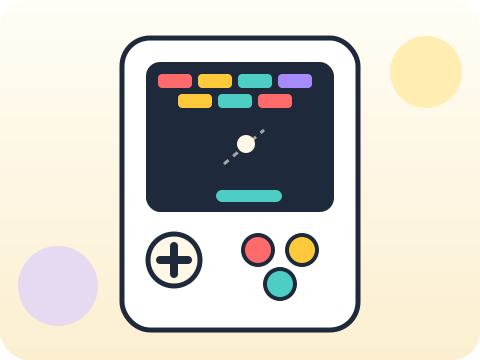
Graphical Game Build
From typed commands to something you can actually play with a keyboard.
- Events
- Collision logic
- Game loop
Class 8 Capstone
Design it on paper. Build it in code. Defend it in front of an audience.
- Design document
- Build and test
- Portfolio presentation
Year-end outcome
A project the student can explain—not just display. By the end of the year, students can:
- Define the problem or learning goal
- Document important decisions and changes
- Test the output and correct issues
- Present the work and answer questions
Assessment approach
Progress across skills, projects and reflection. Reviews consider understanding, application, originality, accuracy, safety, debugging or verification, and the student's ability to explain their work.
- Module practice and mini-projects
- Mid-year review checkpoint
- Portfolio documentation
- Final capstone demonstration
What families and schools ask
Is this Python curriculum suitable for a Class 8 beginner?
How many Python sessions are included?
Will students build real projects?
Does my child need a laptop?
Your child's free trial is one message away.
Tell us your child’s class and what they enjoy. We will suggest the closest program fit—no pressure and no upfront payment.