Conversation flows
Conversation flows map what the user might say and how the bot responds, including the paths nobody planned for.
Designing a chatbot teaches you something surprising: most of the work is deciding what it should refuse to do.
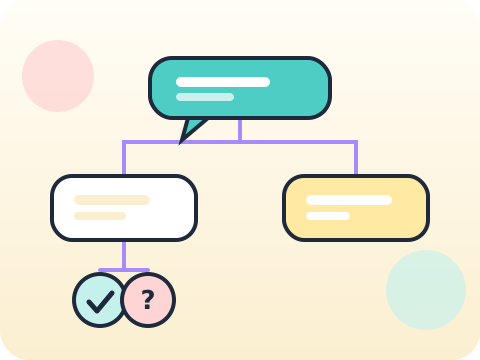
Students map conversation flows for a school-help assistant, define the boundaries of what it should handle, and test it against the awkward things real users will actually type.
Conversation design is systems thinking with a friendly face. It teaches planning for the unexpected without a line of code.
Three core ideas, each taught with worked examples and then practised until it feels obvious.
Conversation flows map what the user might say and how the bot responds, including the paths nobody planned for.
Helpful boundaries mean deciding what the bot will not answer, and saying so clearly instead of guessing badly.
Testing responses means letting other students loose on it. They will type things you would never have imagined.
ELIZA, built in 1966, simply reflected users’ statements back as questions — and people still formed emotional attachments to it.
“A good chatbot answers everything.” A good chatbot answers its own domain well and hands over honestly when it should not.
Sessions 57–64 of the 72-session year, at two one-hour sessions per week.
Where this module fits, what you will build, and a hands-on starter that gets everyone curious about conversation flows.
Guided teaching on conversation flows, worked through together with the teacher.
Independent practice, small challenges and one deliberate mistake to diagnose.
Guided teaching on helpful boundaries, building directly on the previous two sessions.
Applied tasks that combine conversation flows and helpful boundaries in one piece of work.
Testing responses introduced and practised, completing the toolkit needed for the project.
Guided build session for the module project: Prototype school-help chatbot.
Finish, test against the checklist, present the work and explain the decisions behind it.
Every module ends with something the student built themselves and can demonstrate. This is the piece that goes into their portfolio and gets explained out loud at the end of session 64.
Give your chatbot to five classmates without instructions. Log every question it handled badly — that log is your next version.
Students finishing Module 8 can:
The vocabulary introduced here, in plain language:
6 quick questions drawn from this module — vocabulary, the project you build, and a myth-or-fact round. Every wrong answer explains itself, so a mistake still teaches you something.
Tell us your child’s class and what they enjoy. We will suggest the closest program fit—no pressure and no upfront payment.