JSON
JSON looks almost exactly like nested Python dictionaries and lists, which is why moving between the two is nearly effortless.
The whole internet is programs politely asking each other for data.
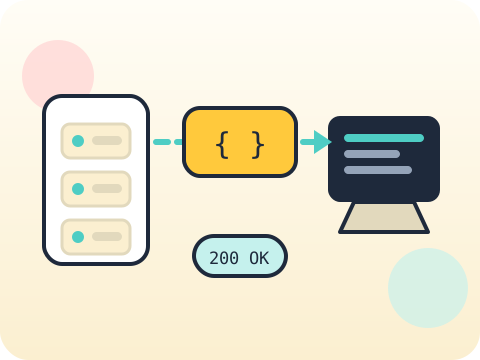
JSON is how machines exchange structured information, and the request–response cycle is how they ask for it. Students read real public data, navigate nested structures and handle the fields that are simply missing.
Once a student can consume an API, the world’s open data — weather, space, transport, sport — becomes project material.
Three core ideas, each taught with worked examples and then practised until it feels obvious.
JSON looks almost exactly like nested Python dictionaries and lists, which is why moving between the two is nearly effortless.
Request and response: your program asks a server for something and receives data plus a status code. 200 means fine; 404 means not found.
Missing data is normal. Real APIs omit fields, return nulls and occasionally fail entirely — code must expect all three.
JSON was not designed as a format so much as noticed. It is a subset of JavaScript syntax that turned out to be perfect for exchanging data.
“The API will always respond.” Networks fail, limits are hit and servers restart. Code that assumes success crashes in front of an audience.
Sessions 33–40 of the 72-session year, at two one-hour sessions per week.
Where this module fits, what you will build, and a hands-on starter that gets everyone curious about json.
Guided teaching on json, worked through together with the teacher.
Independent practice, small challenges and one deliberate mistake to diagnose.
Guided teaching on request-response concept, building directly on the previous two sessions.
Applied tasks that combine json and request-response concept in one piece of work.
Handle missing data introduced and practised, completing the toolkit needed for the project.
Guided build session for the module project: Public-data explorer.
Finish, test against the checklist, present the work and explain the decisions behind it.
Every module ends with something the student built themselves and can demonstrate. This is the piece that goes into their portfolio and gets explained out loud at the end of session 40.
Pull live data from a free public API — space, weather or earthquakes — and display one genuinely interesting fact from it.
Students finishing Module 5 can:
The vocabulary introduced here, in plain language:
6 quick questions drawn from this module — vocabulary, the project you build, and a myth-or-fact round. Every wrong answer explains itself, so a mistake still teaches you something.
Tell us your child’s class and what they enjoy. We will suggest the closest program fit—no pressure and no upfront payment.