Data types
Data types decide what operations make sense. You can multiply an int, join a string and check a bool — mixing them without converting is where the errors live.
A quick tune-up before the engine gets bigger.
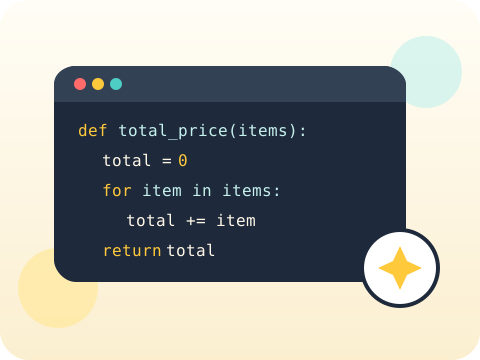
This module re-establishes the fundamentals at a higher standard: correct data types, clean input and output, and code another person can actually read. Speed comes later — clarity comes now.
Class 7 work stacks quickly. Students who write readable code spend the rest of the year building; students who do not spend it hunting for their own mistakes.
Three core ideas, each taught with worked examples and then practised until it feels obvious.
Data types decide what operations make sense. You can multiply an int, join a string and check a bool — mixing them without converting is where the errors live.
Good input and output means prompting clearly, validating what arrives, and formatting results so a human can read them at a glance. f-strings make this painless.
Readable code means meaningful names, consistent spacing and short comments explaining why, not what. Your future self is the reader you are writing for.
Developers spend roughly ten times longer reading code than writing it. Every minute spent on a clear variable name pays itself back many times over.
“Comments make code good.” Clear naming makes code good. Comments explain the reasoning that names cannot carry.
Sessions 1–8 of the 72-session year, at two one-hour sessions per week.
Where this module fits, what you will build, and a hands-on starter that gets everyone curious about data types.
Guided teaching on data types, worked through together with the teacher.
Independent practice, small challenges and one deliberate mistake to diagnose.
Guided teaching on input and output, building directly on the previous two sessions.
Applied tasks that combine data types and input and output in one piece of work.
Readable code introduced and practised, completing the toolkit needed for the project.
Guided build session for the module project: Profile generator.
Finish, test against the checklist, present the work and explain the decisions behind it.
Every module ends with something the student built themselves and can demonstrate. This is the piece that goes into their portfolio and gets explained out loud at the end of session 8.
Take any program you wrote last year and rename every variable to something honest. Do not change the logic — just the names — and see how much clearer it reads.
Students finishing Module 1 can:
The vocabulary introduced here, in plain language:
6 quick questions drawn from this module — vocabulary, the project you build, and a myth-or-fact round. Every wrong answer explains itself, so a mistake still teaches you something.
Tell us your child’s class and what they enjoy. We will suggest the closest program fit—no pressure and no upfront payment.