Generative AI concepts
Generative AI concepts cover tokens, context windows and why a model eventually forgets the start of a long conversation.
Different models are good at different things. Knowing which is which is a real skill.
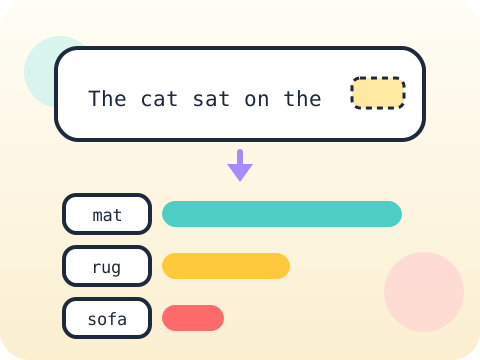
Students move from using one tool to comparing several — testing the same task across models, recording where each performs well, and observing hallucination as a measurable behaviour rather than a rumour.
Model literacy prevents both blind trust and blanket dismissal. Both are common, and both are wrong.
Three core ideas, each taught with worked examples and then practised until it feels obvious.
Generative AI concepts cover tokens, context windows and why a model eventually forgets the start of a long conversation.
Model capabilities differ by design — some reason better, some write better, some see images, some search the web.
Hallucinations are systematic, not random. They cluster around obscure facts, recent events, numbers and citations.
A context window is the model’s working memory. Exceed it and the earliest parts of the conversation genuinely fall out of view.
“The newest model is best at everything.” Benchmarks vary by task. The right question is always “best for what?”
Sessions 1–8 of the 72-session year, at two one-hour sessions per week.
Where this module fits, what you will build, and a hands-on starter that gets everyone curious about generative ai concepts.
Guided teaching on generative ai concepts, worked through together with the teacher.
Independent practice, small challenges and one deliberate mistake to diagnose.
Guided teaching on model capabilities, building directly on the previous two sessions.
Applied tasks that combine generative ai concepts and model capabilities in one piece of work.
Hallucinations introduced and practised, completing the toolkit needed for the project.
Guided build session for the module project: Model comparison experiment.
Finish, test against the checklist, present the work and explain the decisions behind it.
Every module ends with something the student built themselves and can demonstrate. This is the piece that goes into their portfolio and gets explained out loud at the end of session 8.
Run one identical, difficult task across three models and score them on accuracy, usefulness and honesty about uncertainty.
Students finishing Module 1 can:
The vocabulary introduced here, in plain language:
6 quick questions drawn from this module — vocabulary, the project you build, and a myth-or-fact round. Every wrong answer explains itself, so a mistake still teaches you something.
Tell us your child’s class and what they enjoy. We will suggest the closest program fit—no pressure and no upfront payment.