Prompt purpose
Purpose means saying what you actually want: explain, list, compare, correct, or shorten. “Tell me about volcanoes” has no purpose in it.
A vague question gets a vague answer. Every single time.
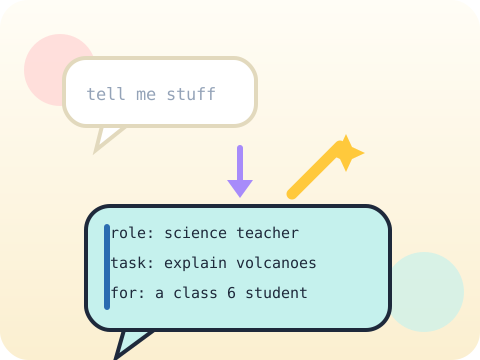
A prompt is an instruction, and instructions can be good or poor. Students learn to state a purpose, supply context and set limits — then compare the difference between a lazy prompt and a considered one on the very same task.
Prompting is really just clear communication, and clear communication improves a child’s writing and speaking as much as their AI results.
Three core ideas, each taught with worked examples and then practised until it feels obvious.
Purpose means saying what you actually want: explain, list, compare, correct, or shorten. “Tell me about volcanoes” has no purpose in it.
Context and constraints do the heavy lifting: who it is for, how long it should be, what to include and what to leave out.
Improving weak prompts is a repeatable move — write one, look at the answer, then change one thing and try again.
Adding “explain it to an eleven-year-old” changes an AI answer more dramatically than almost any other instruction of similar length.
“Longer prompts are better prompts.” Clearer prompts are better. A precise sentence beats a rambling paragraph.
Sessions 9–16 of the 72-session year, at two one-hour sessions per week.
Where this module fits, what you will build, and a hands-on starter that gets everyone curious about prompt purpose.
Guided teaching on prompt purpose, worked through together with the teacher.
Independent practice, small challenges and one deliberate mistake to diagnose.
Guided teaching on context and constraints, building directly on the previous two sessions.
Applied tasks that combine prompt purpose and context and constraints in one piece of work.
Improving weak prompts introduced and practised, completing the toolkit needed for the project.
Guided build session for the module project: Personal prompt recipe cards.
Finish, test against the checklist, present the work and explain the decisions behind it.
Every module ends with something the student built themselves and can demonstrate. This is the piece that goes into their portfolio and gets explained out loud at the end of session 16.
Ask for a homework explanation twice — once in five words, once with audience, length and format specified. Put the answers side by side.
Students finishing Module 2 can:
The vocabulary introduced here, in plain language:
6 quick questions drawn from this module — vocabulary, the project you build, and a myth-or-fact round. Every wrong answer explains itself, so a mistake still teaches you something.
Tell us your child’s class and what they enjoy. We will suggest the closest program fit—no pressure and no upfront payment.