Foundation models
Foundation models are large general-purpose models adapted to many tasks, rather than built for one.
Know the landscape and you stop being impressed by everything equally.
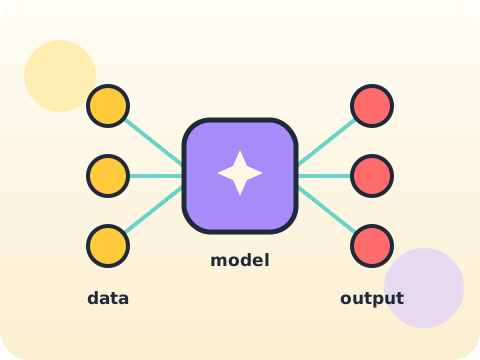
Students build a working map of modern AI: what foundation models are, how multimodal systems differ, and how to evaluate a capability claim rather than accepting a headline.
Board-year students are making subject and career decisions. An accurate map of the field is genuinely useful information.
Three core ideas, each taught with worked examples and then practised until it feels obvious.
Foundation models are large general-purpose models adapted to many tasks, rather than built for one.
Multimodal systems handle text, image, audio and video together, which changes what applications are even possible.
Capability evaluation means testing claims yourself on tasks you can verify, rather than trusting benchmark headlines.
Benchmark scores can be inflated when test material has leaked into training data — a known problem called contamination.
“Benchmarks show which model is best.” They show performance on specific tests. Your task is not those tests.
Sessions 1–8 of the 72-session year, at two one-hour sessions per week.
Where this module fits, what you will build, and a hands-on starter that gets everyone curious about foundation models.
Guided teaching on foundation models, worked through together with the teacher.
Independent practice, small challenges and one deliberate mistake to diagnose.
Guided teaching on multimodal systems, building directly on the previous two sessions.
Applied tasks that combine foundation models and multimodal systems in one piece of work.
Capability evaluation introduced and practised, completing the toolkit needed for the project.
Guided build session for the module project: AI landscape briefing.
Finish, test against the checklist, present the work and explain the decisions behind it.
Every module ends with something the student built themselves and can demonstrate. This is the piece that goes into their portfolio and gets explained out loud at the end of session 8.
Design your own five-task benchmark from problems you can check, and run it on every model you have access to.
Students finishing Module 1 can:
The vocabulary introduced here, in plain language:
6 quick questions drawn from this module — vocabulary, the project you build, and a myth-or-fact round. Every wrong answer explains itself, so a mistake still teaches you something.
Tell us your child’s class and what they enjoy. We will suggest the closest program fit—no pressure and no upfront payment.